Performance & Hydration Toolkit

A person tying their running shoe, next to a glass of orange juice, before a jog

Share :

Print

Hydration plays an important role in supporting performance, from everyday routines to active lifestyles, and nutrient-dense beverage choices — like 100% orange juice — can help support both.  

This toolkit brings together practical resources and evidence-based insights. All are designed to help you communicate about performance and hydration as well as support patients’ goals. 

What’s included on this page:

Benefits at a Glance |  Resources  |  Recipes  |  Research

Benefits at a Glance

Helping people meet hydration and performance goals often starts with practical, approachable nutrition habits. Here, you’ll find key points on how 100% orange juice contributes by including fluids, electrolytes and key nutrients that support hydration, energy metabolism and recovery.  

  • Nearly 90% water, 100% orange juice has naturally occurring electrolytes like potassium, helping support daily hydration.1
  • In fortified varieties, calcium and vitamin D in 100% orange juice can support bone health and muscle function.
    3,4
  • 100% orange juice includes hesperidin, a unique polyphenol primarily found in citrus that has been associated with an anti-inflammatory response.9
  • An 8-ounce serving of 100% orange juice is an excellent source of vitamin C, which has been shown to help reduce inflammation and enhance the absorption of iron in plant-based sources.10,11
  • Research shows that drinking 100% orange juice can support post-exercise hydration similarly to water and sports drinks. The study results showed no difference between the beverages in taste preference, thirst level, hydration or gastrointestinal distress, making 100% OJ a great option to support fluid balance with no added sugar.2

Resources

Explore materials designed to help communicate the benefits of 100% orange juice, including patient-friendly handouts and research insights.
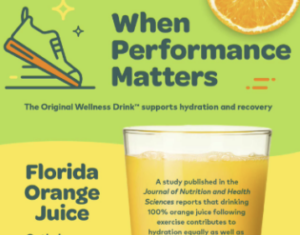
A downloadable patient resource highlighting the many ways 100% orange juice helps support performance and hydration.
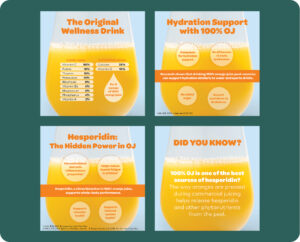
Shareable social images to use with patients and broader audiences, highlighting how 100% OJ hydrates as well as water and sports drinks.
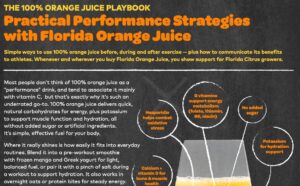
downloadable handout with ideas for using 100% OJ, plus talking points to help translate performance benefits into practice.

Recipes

To supplement our Recipe Hub,  we’re highlighting three beneficial recipes. From pre-activity fuel to post-exercise recovery, these recipes highlight how 100% orange juice can support hydration and performance throughout the day.  

No Bake Protein Balls

A simple, tasty snack that provides your body with energy, protein and nutrients it needs to support daily activities.

Orange Cream Smoothie

A delicious way to replenish your body with hydration and protein to optimize post-exercise recovery.

Florida OJ Sports Drink

This naturalnutrient-rich sports drink supports daily hydration and is refreshingly easy to make.

Research

Hydration and physical performance are supported by fluid intake, electrolytes and other key nutrients. 100% orange juice offers water, potassium and carbohydrates, along with additional nutrients and bioactive compounds that play a role in recovery and exercise outcomes. Ongoing research continues to explore how it can fit into hydration and performance strategies.  

References

  1. Potassium: fact sheet for health professionals. National Institutes of Health, Office of Dietary Supplements. Updated June 2, 2022. Accessed January 23, 2026.  https://ods.od.nih.gov/factsheets/Potassium-HealthProfessional/  
  2. Kelly MR, Emerson DM, Landes EJ, Barnes ER, Gallagher PM (2020) Gastrointestinal Implications of Post-Exercise Orange Juice Consumption. J Nutr Health Sci 7(1): 101  
  3. Calcium: fact sheet for health professionals. National Institutes of Health, Office of Dietary Supplements. Updated July 11, 2025. Accessed February 10, 2026. https://ods.od.nih.gov/factsheets/calcium-HealthProfessional/  
  4. Vitamin D: fact sheet for health professionals. National Institutes of Health, Office of Dietary Supplements. Updated June 27, 2025. Accessed February 10, 2026. https://ods.od.nih.gov/factsheets/VitaminD-HealthProfessional/  
  5. Folate: fact sheet for health professionals. National Institutes of Health, Office of Dietary Supplements. Updated November 30, 2022. Accessed January 23, 2026. https://ods.od.nih.gov/factsheets/Folate-HealthProfessional/  
  6. Thiamin: fact sheet for health professionals. National Institutes of Health, Office of Dietary Supplements. Updated February 9, 2023. Accessed February 3, 2026.  https://ods.od.nih.gov/factsheets/Thiamin-HealthProfessional/  
  7. Vitamin B6: fact sheet for health professionals. National Institutes of Health, Office of Dietary Supplements. Updated June 16, 2023. Accessed February 10, 2026. https://ods.od.nih.gov/factsheets/VitaminB6-HealthProfessional/  
  8. Niacin: fact sheet for health professionals. National Institutes of Health, Office of Dietary Supplements. Updated November 18, 2022. Accessed February 10, 2026. https://ods.od.nih.gov/factsheets/Niacin-HealthProfessional/  
  9. Milenkovic, Dragan et al. “Hesperidin displays relevant role in the nutrigenomic effect of orange juice on blood leukocytes in human volunteers: a randomized controlled cross-over study.” PloS one vol. 6,11 (2011): e26669. doi:10.1371/journal.pone.0026669 
  10. Vitamin C: fact sheet for health professionals. National Institutes of Health, Office of Dietary Supplements. Updated July 31, 2025. Accessed January 23, 2026. https://ods.od.nih.gov/factsheets/VitaminC-HealthProfessional/  
  11. Iron, In: fact sheet for health professionals. National Institutes of Health, Office of Dietary Supplements. Updated June 16, 2023. Accessed February 10, 2026 

Share :

Print